


Review: Good Boy


Horror films have been shot through the eyes of children, monsters, demons, and once even a tire, but rarely if ever through the perspective of a scruffy dog. Enter Good Boy, Ben Leonberg’s shaggy, 72-minute experiment in canine POV horror, where nearly every creak of a floorboard or half-glimpsed shadow is filtered through the worried eyes of Indy, a Nova Scotia retriever who somehow manages to carry a feature film more convincingly than many human actors.
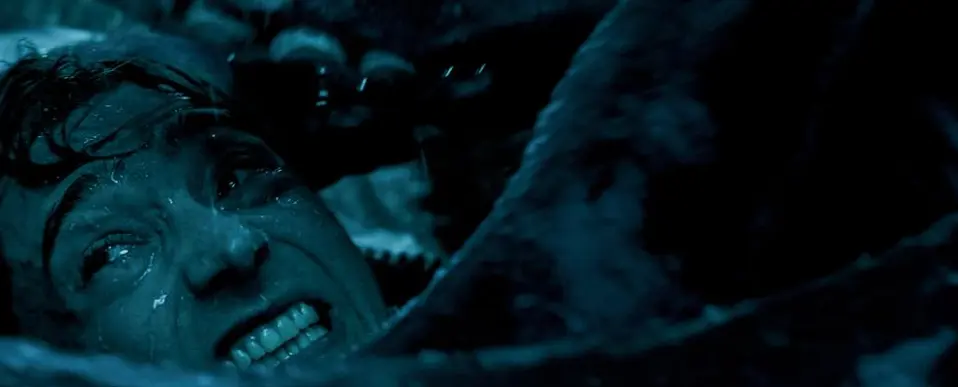
The premise is irresistible: Todd (Shane Jensen), Indy’s ailing owner, relocates to his family’s remote farmhouse to regroup after health struggles and the hovering concern of his sister, Vera (Arielle Friedman). But the move is less a fresh start than an invitation for history to repeat itself. We learn, through a patchwork of muffled phone calls and old home-video snippets, that Todd’s grandfather (indie stalwart Larry Fessenden, glimpsed only in memories) also deteriorated in that very house, alone and tormented. Whether what haunted him was illness, addiction, or something supernatural, Indy is about to find out, because this time, it’s up to a dog to protect his human.
Leonberg, directing from a script co-written with Alex Cannon, leans hard into the limitations of his conceit. Humans are framed from the shoulders down, conversations trail off into muffled abstraction, and the camera quite literally never rises above Indy’s eye line. It’s a trick that initially feels refreshing, disorienting in just the right way, because it makes us share Indy’s helpless uncertainty. When Todd takes a hushed phone call outside the car, the camera stays inside with Indy, hearing only muffled scraps. We know something’s wrong, but, like the dog, we’re shut out from the details. The effect is clever and quietly unnerving, if a touch precious after the third or fourth time.
And make no mistake: Indy is the star here. Whatever treats or hot dogs Leonberg used as motivation, the result is an endlessly expressive performance that anchors the film. Those worried eyes give Good Boy its emotional bite, selling the creeping dread more effectively than most of the film’s jump scares. You could argue that Indy is basically John Wick’s puppy crossed with a found-footage cameraman, he sees everything, he understands nothing, and he’s the one we’re desperate to keep safe.
Still, a strong gimmick only carries a horror film so far, and Good Boy occasionally squanders its promise. The supernatural disturbances; shadowy figures that vanish, candles that snuff themselves out, floorboards that creak just off screen, are textbook creepiness, but they don’t escalate with enough variation to sustain the tension. Too often, the film circles back to the same recurring nightmare sequences, undercutting the sense of real danger. It’s as if Leonberg worried about traumatizing audiences who might not forgive him for putting a dog through the wringer, so he holds back just when things threaten to get truly terrifying. The result is creepy rather than scary, unsettling but rarely overwhelming.
What lingers more than the haunts is the metaphor: Indy’s helplessness in the face of Todd’s decline. It’s frightening to watch a loved one get sick when you don’t understand what’s happening, and terrifying even when you do. The film draws poignancy from that parallel, though its storytelling discipline falters as time goes on. By the final stretch, the disorientation slips from purposeful to muddled, with one ill-advised visual effects flourish threatening to collapse the illusion entirely.
Yet despite its unevenness, Good Boy earns a soft spot simply because it dares to see horror through such an unusual lens. The film’s commitment to its canine perspective makes even its flaws fascinating, and Leonberg’s restraint, when it works, recalls the offscreen dread of better, scarier films. More importantly, Indy proves himself not just a good boy but a great screen presence, worthy of all the pets, treats, and post-screening applause you can give him.
At just over an hour, Good Boy doesn’t quite answer the question of whether a dog-eyed horror film can truly terrify. But it does suggest that, for brief stretches, the horror genre might benefit from more four-legged narrators. After all, Indy deserves more than a pat on the head, he deserves final billing above the title.
3/5


Comments