


Review: Clayface


The most encouraging thing about Clayface is not that it makes a second-tier Batman villain interesting. It is that the film understands that being interesting is not the same as being important. There is no breathless roll call of future heroes, no homework disguised as world-building, and no Bat-shaped insurance policy waiting in the shadows. Director James Watkins simply takes a sad man, ruins his face, gives him a terrible cure, and watches what leaks out.
Tom Rhys Harries plays Matt Hagen, a Gotham-born actor enjoying the best week of his life. He has escaped a difficult childhood, earned an Oscar nomination, and built a career around the sort of face cameras were invented to love. Then he crosses mobster Markos Szabo, played with reptilian menace by David Dencik, and that face is carved into something Hollywood no longer wants. Lawsuits fail. Surgeries make things worse. Friends drift away. The industry that celebrated Matt’s transformation from street kid to movie star suddenly treats him like damaged merchandise.
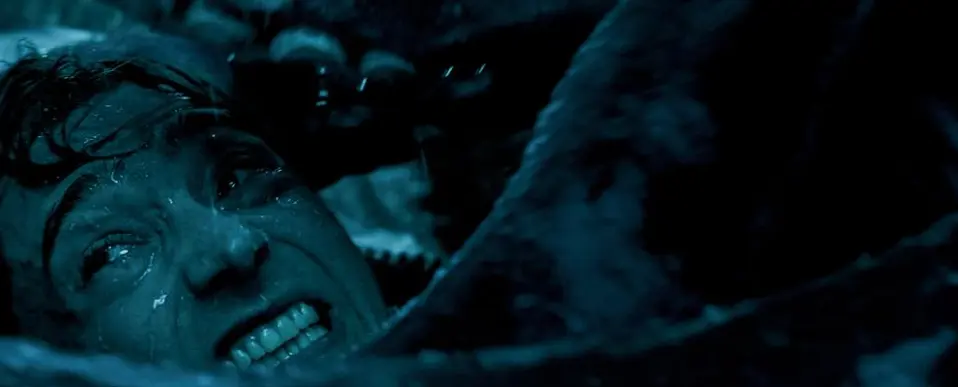
Desperate, Matt turns to Dr. Caitlyn Corr (Naomi Ackie), whose experimental “nanocells” promise to regenerate destroyed tissue. The procedure works just well enough to become irresistible, then badly enough to become a horror movie. Matt’s skin begins slipping, stretching, sealing, and rearranging itself. When he pushes the treatment beyond its limits, he discovers he can wear other people’s faces. That gift gives a wounded actor the perfect tool for revenge and removes the last reason for him to remain himself.
Watkins does not waste the premise. Clayface is wet, ugly, and admirably committed to making the audience uncomfortable. An airplane sequence involving fused eyelids, turbulence, and grooming scissors earns every wince without feeling like a disposable gross-out gag. The effects have weight and texture; faces do not vanish in a clean digital shimmer but pull apart like stubborn dough. Even when computer imagery becomes more obvious during the larger transformations, the film preserves the upsetting sense that a human body is being asked to do something it knows is wrong.
Harries is the reason the movie remains more than an effects showcase. Matt begins as someone who has spent years performing a polished version of himself, and his new ability turns that private habit into a literal curse. Harries finds the fear beneath the vanity and the rage beneath the fear. He is especially good in the quieter moments, when Matt studies his reflection as if waiting for it to make the first move. Ackie brings intelligence and warmth to Caitlyn, although the script asks their relationship to carry more emotional weight than it has properly built.
That is the film’s recurring problem. Mike Flanagan and Hossein Amini’s screenplay contains several rich ideas about beauty, class, shame, celebrity, and the exhausting work of maintaining an acceptable face. It touches all of them, sometimes effectively, but the revenge plot keeps dragging the movie toward more familiar ground. Matt’s transformation is tragic; his path through corrupt cops and Gotham gangsters is considerably less surprising. By the time the story expands into a noisy final act, some of its intimate misery has hardened into franchise-ready spectacle.
Gotham itself also feels caught between identities. The rain, clubs, crooked institutions, and exhausted neon create an appropriately diseased atmosphere, but the city rarely develops a personality separate from other recent screen Gothams. That matters in a movie about a man losing his distinct shape. Clayface wants its setting to feel specific while keeping enough visual flexibility to belong to a larger universe. The compromise is handsome, grimy, and occasionally anonymous.
Still, there is something refreshing about a comic-book movie willing to be this unpleasant and unconnected to a series of other movies. Clayface is not an origin story designed to make its villain secretly noble. Matt remains sympathetic after he becomes dangerous, but sympathy does not excuse him or flatten him into an antihero. The film lets pain explain cruelty without pretending it cleans the blood away.
Clayface never completely molds its horror, romance, crime story, and character study into one seamless figure. But the cracks are part of its appeal. It is nasty, sad, ambitious, and anchored by a star-making performance from Harries. In a genre obsessed with protecting familiar faces, this is a movie willing to melt one.
3/5


Comments